
You Don’t Have to Waste *That* Much Food at Camp - from IISD Experimental Lakes Area
By Matthew Klachefsky, Manager of Education and Indigenous Relations, IISD Experimental Lakes Area
How much food do you waste at camp?
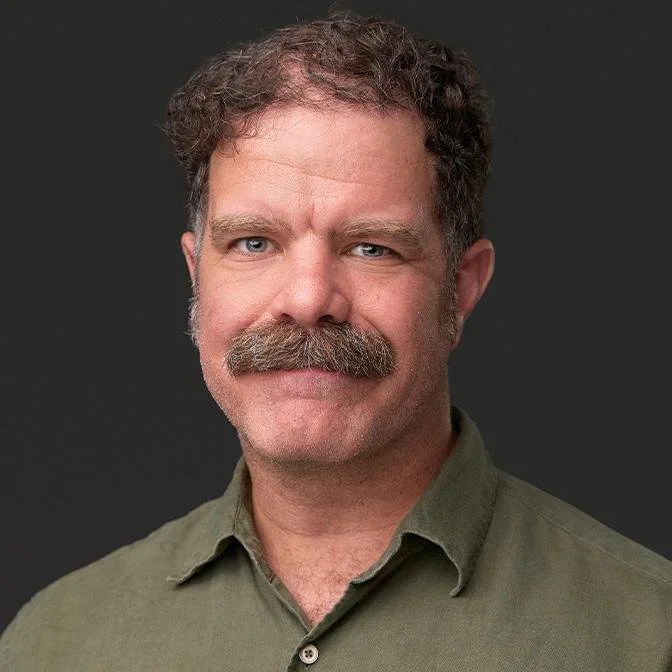
Matthew Klachefsky - King of Compost
How much food do you waste at camp? When you combine campers with picky appetites, uncontrolled portions, and sheer volume of food being served, I bet it is a lot if you don’t already have some processes in place. According to the UN, the world wastes one billion meals EVERY SINGLE DAY. My wild take: that’s too much. But when you think about it beyond just the amount of mouths we could feed it gets even worse, as food waste directly causes greenhouse gas emissions and drives biodiversity loss all over the planet.
Are you going to solve that at your camp? Nope! But! I have great news!
You’re in charge of moulding the minds of thousands of future generations to come and a good message delivered well can lead to exponential growth of an idea!
Oh, also, reducing food waste can reduce your operating costs. OK, NOW you’re listening.
So, what can you do?
Here are a few ideas. First, if you don’t have a food waste messaging program, you’re missing an opportunity. Back in my heyday at Camp Stephens in Kenora, Ontario, we were fanatical about reducing food waste. The mantra would be “take what you need, and eat what you take,” meaning keep your helpings a reasonable size and then go get more if you’re still hungry. Don’t heap your plate full of food you won’t eat! There’s always more!
At the end of every meal, if campers had food left on their plate, the counsellor would scrape it together and drop it in a communal bucket. We’d then measure the day’s food waste and give it a rating. The ratings, as with most camp things, were usually silly and arbitrary. We’d have big signs that said things like “Great job” or “Keep Trying” or “Yuck” or even the dreaded “Bunk.” Sometimes the signs were nonsense, “On Fleek” was a popular sign whatever year that was that people were saying that. But: if the bucket was ever empty… you’d better believe we’d have a dance party. This just meant bringing the stereo in and blasting a couple popular songs while the campers go nuts. This only happened maybe four times my entire career, but it’s a very useful carrot to dangle.
Starting a food waste reduction program is something you can do today, it makes a big difference in reducing the food you waste (and the food you spend money on), and it sends a great message to your campers.
But there are also operational ways you can reduce food waste.
The most obvious way is to compost. Composting might seem to like a good way to reduce the amount of trash that is going to the landfill, and a good way to create soil for gardening, but did you know that just by sending organic waste to landfills you are creating harmful greenhouse gasses? Decomposing food releases methane, which is 25 times better at trapping heat than carbon dioxide. Not only that, but good composting actually absorbs greenhouse gasses. Composting doubles your greenhouse gas reduction.
Composting at camps can be difficult as you’re dealing with high volumes and natural spaces that, if done incorrectly, can attract unwanted wildlife to your camp. And while I would love a visit from the occasional friendly raccoon, it’s not always fun to turn the corner and bump into a full-grown bear snacking away on your old lunches. So, if you’re going to build a compost unit, make sure it is bear-proof.
Composting toilets are a big investment but then you’re killing two birds with one stone as one toilet unit can reduce your human waste and your food waste, and if you have one, then you already have a bear-proof composter. We had a Phoenix unit and it was a functional toilet that also was able to take all of our camp’s kitchen compost… that’s for a capacity of over 300 people. Just make sure your team knows how to use it, because if it is not taken care of properly it can really start to stink!
So maybe your camp is already composting, and you might think this post has nothing to offer you (why did you read this far?). But I want to introduce to you the final boss of camp composting: Bokashi compost.
Before I arrived at IISD Experimental Lakes Area (IISD-ELA) I did not know that this existed, but it is real and it is awesome. Bokashi compost uses fermentation process and it allows you to compost just about EVERYTHING*. Meats, dairies, breads, those half eaten grilled cheese sandwiches, those little globs of ketchup smeared with mayonnaise on the side of the plate… everything. The process involves sealing the food waste in buckets—the 20 L size sour cream buckets your kitchen is always throwing out work great-- with a bit of “bokashi bran” or you can even make a homemade spray. When the bucket is full the food waste ferments for a couple weeks, then you can bury it to make rich garden soil or just find a spot at your site that you can bury it and then forget about it… it doesn’t attract vermin or animals.
I’ll be honest though, to scale up Bokashi composting to manage all the food waste at a large camp might be a challenge, as increasing the amount of buckets that you are using and fermenting the waste with can reach a level of absurdity. But this is all about reduction, and no system is perfect. Combining Bokashi composting with a good food waste messaging program and large scale traditional composting can reduce your carbon footprint and your operational costs, not to mention your trips to the dump with those overfilled garbage bags full of last weeks oatmeal. It’s a win-win.
*OK maybe not EVERYTHING, it can’t handle large amounts of liquids or oils. Still impressive!
-
Matthew Klachefsky is the Manager of Education and Indigenous Relations at IISD Experimental Lakes Area. He has also worked 18 summers at summer camp all over the world including nine years as director of YMCA-YWCA Camp Stephens in Kenora, Ontario.
He can be reached at mklachefsky@iisd-ela.org.